badkamer
Living independently at home longer: how to stay in control

Ask a hundred people where they want to grow old, and the vast majority will give the same answer: at home. In the house where the children grew up, with the neighbors you know and the chair that fits just right. That's not stubbornness—it's a deep, healthy desire to remain in control of your own life.
The good news: staying independent at home for longer is achievable for most people. Not through major renovations or expensive care packages, but by making the right—often surprisingly small—adjustments at the right time. This guide explains how to do that.
Living at home is the new normal
Elderly care in the Netherlands is changing. Nursing homes as we knew them are disappearing, and for years, policy has been focused on elderly people staying in their own homes for as long as possible. This also aligns with what most people themselves want: self-management, their own rhythm, their own place.
But independent living does demand something from your home. A home that was perfect when you were fifty might present a few challenges when you're eighty. Those who recognize this in time—and calmly address it—prevent a minor inconvenience from becoming a reason to move.
The three pillars of independent living
Whether living at home remains comfortable practically depends on three things:
- Safety — can you move through the house without a risk of falling?
- Ease — do daily actions (getting up, showering, climbing stairs) not cost unnecessary energy?
- Confidence — do you dare to do what you always did, even at night?
The last one is often forgotten but is perhaps the most important. Someone who is afraid of falling moves less. Moving less means less muscle strength, and less muscle strength means... a greater risk of falling. Breaking that cycle begins with a house that helps.
Start with the bathroom
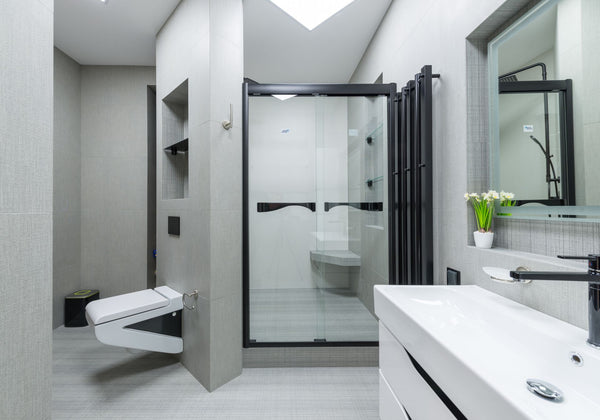
If you tackle one place in the house, let it be the bathroom and toilet. According to research by VeiligheidNL, the sanitary area—after the stairs—is the most risky place in the house for people over 65. The combination of slippery floors, few support points, and the frequent getting up and sitting down makes this small space responsible for a large proportion of falls at home.
Adjustments are made in steps
You don't have to renovate immediately. Think in three levels:
1. Small and immediate (can be arranged today)
- Remove loose rugs and mats, or secure them with anti-slip tape
- Anti-slip strips in the shower and bath
- Nightlights with motion sensors on the bedroom-toilet route
- Items you use daily at arm's reach
2. Smart aids (arranged within a week)
- Support handles by the toilet and shower
- A shower chair or stool
- A second stair railing
3. Structural support (if getting up is really difficult)
- An electric toilet lift that gently guides you up and down
- A walk-in shower without a threshold
- Possibly a stairlift
The trick is not to postpone level 3 until after a fall. An aid is not a sign of decline—it is precisely what enables independence.
The signals to take action
How do you know when it's time? Pay attention to these moments:
- You push off the sink or windowsill to get up from the toilet
- You dread nighttime toilet visits
- You skip things you used to do routinely (bath, long walk)
- You ask—or consciously avoid asking—for help with everyday things more often
Do you recognize two or more? Then now is the time to arrange something. Not because it's no longer possible, but precisely because it's still easy to arrange now.
For sons, daughters, and informal caregivers
Talk about it—but don't start with "you must." Ask what your father or mother finds most important to be able to keep doing, and find a solution together. An adjustment someone chooses themselves will be used. An adjustment that is forced will be in the shed after a month.
Independence is something you organize
Living at home longer doesn't just happen to you—you arrange it. With small steps, taken in time, the home you love will also remain the home that works for you.
Does getting up from the toilet noticeably take more effort? Then take a look at the Comfort StandUp: an electric toilet lift that gently and controllably helps you get up and sit down—without renovation, fitting on almost any toilet.